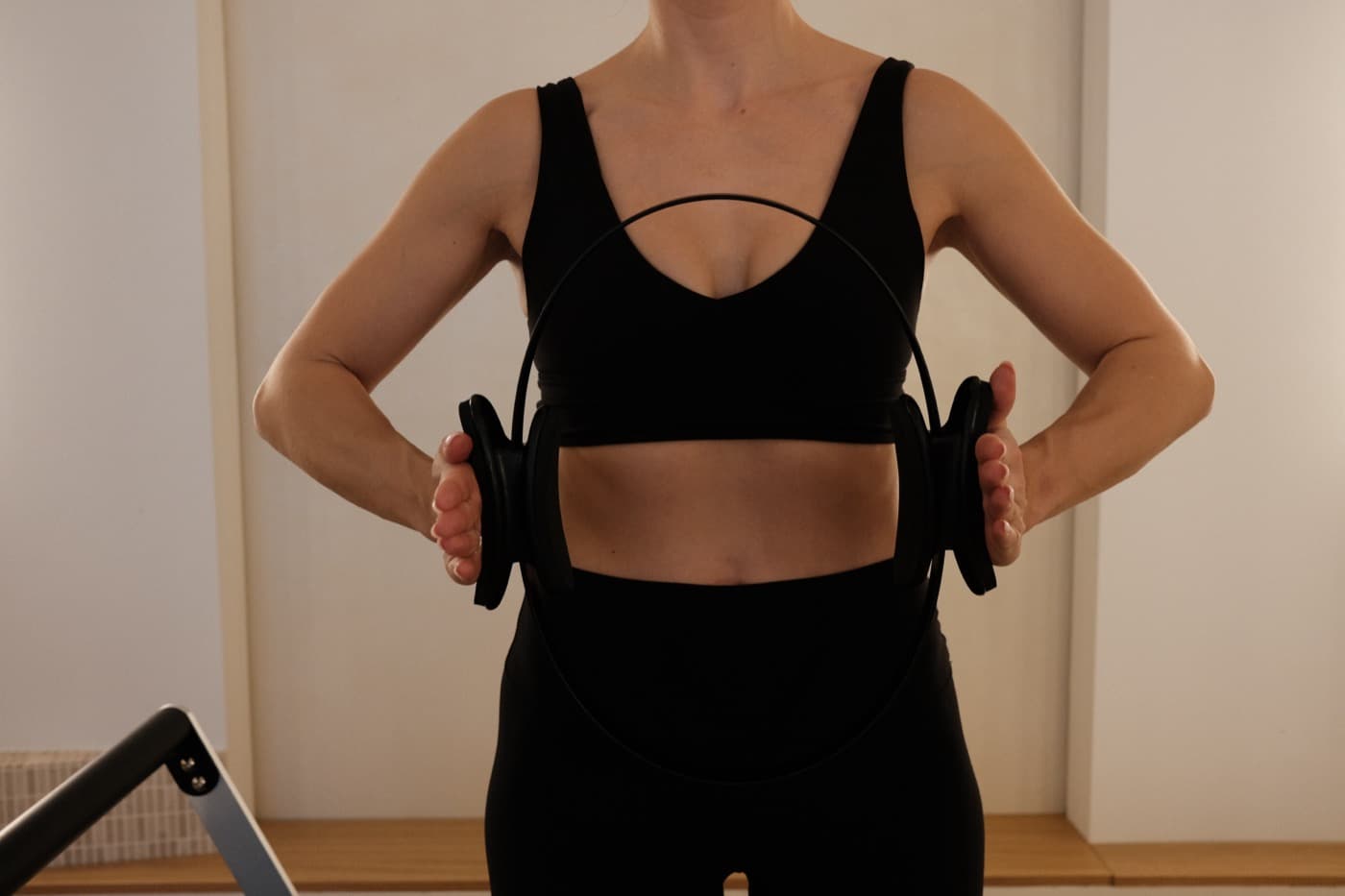
You plan a class for beginners — and then three experienced participants show up. Or the other way around. Mixed-level classes are reality, and that is not as bad as it sounds.
Layering Instead of One-Size-Fits-All
The key to successful mixed-level classes lies in the layering principle: one exercise, multiple options. You offer a base version, present an easier variation (regression), and simultaneously show a more demanding option (progression). Each person chooses their level — without feeling excluded.
Practical Example: Roll-Up
- Regression: Half roll-back with band support
- Base: Roll-up with arm momentum
- Progression: Roll-up controlled, without momentum, with additional rotation at the top
Language That Includes Everyone
Frame instructions so they apply to all. Instead of "this is easy" or "this is hard," say: "Find your version of this." This phrasing signals to all participants: you belong here, wherever you are right now.
"The group is as strong as the inclusivity of its language."
Structure Creates Safety
In mixed-level groups, structure is more important than in homogeneous classes. Clear transitions, clear demonstrations, sufficient preparation time — this gives all participants the security they need to challenge themselves.
Experienced Participants as a Resource
Advanced participants are not a burden — they are a resource. They can work with less verbal guidance while you focus more on beginners. Plan this consciously: give experienced participants tasks that keep them engaged independently while you navigate the group.
Mixed-level classes are training for you as an instructor — in flexibility, observation, and quick response. Those who master these classes are prepared for everything.
Frequently Asked Questions
How do I teach beginners and advanced participants in one class?
Through layering: one exercise, several options. Offer a base version, show an easier regression and a more demanding progression, and let each person pick. On the roll-up that means half roll-back with band support, roll-up with arm momentum, or a controlled roll-up without momentum plus rotation.
How should I word the options so nobody feels excluded?
Avoid this is easy and this is hard. Say find your version of this. The phrasing signals to everyone in the room that they belong here, wherever they happen to be right now.
What do I do with advanced participants in a mixed group?
Treat them as a resource, not a burden. They work with less verbal guidance, which frees you for the beginners — but plan that deliberately and give them tasks that keep them engaged while you navigate the rest of the room.
Does a mixed-level class need more structure than a homogeneous one?
More. Clear transitions, clear demonstrations and enough preparation time are what give participants the security to challenge themselves at their own level.