Reformer group classes are their own discipline. The apparatus enables incredible depth — but it also places specific demands on you as an instructor. Those who understand these demands and actively shape them offer classes that truly move their participants forward.
The Apparatus as a Pedagogical Tool
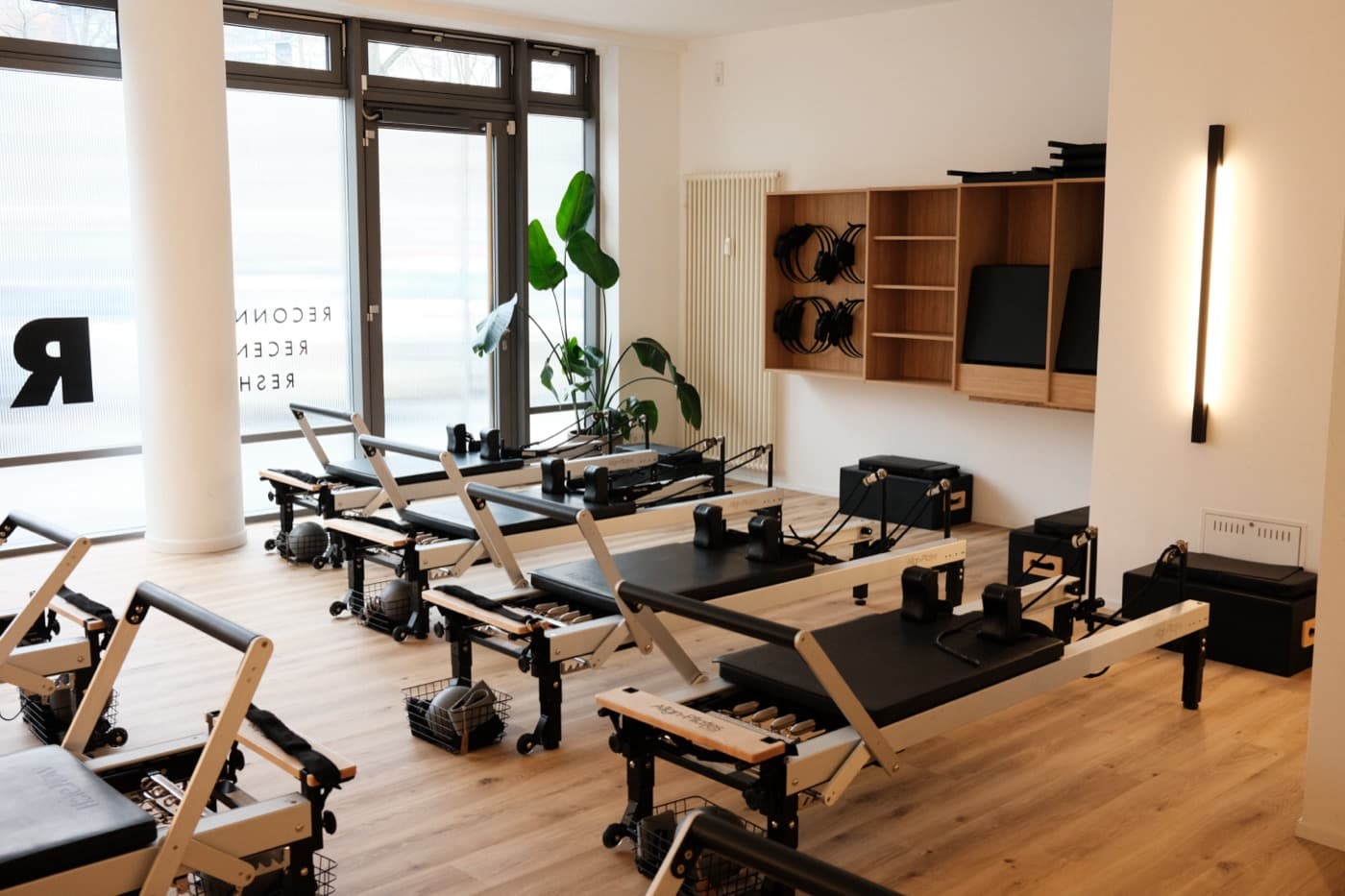
The reformer is not simply a piece of equipment — it is a feedback system. The springs reveal where a body is compensating. Movement on the carriage shows where stability is lacking. As an instructor, you have this information constantly in front of you. The question is: are you reading it?
"The reformer tells you more than your participant could ever put into words."
Springs as Teaching Language
Spring configurations are not a technical footnote — they are a central pedagogical decision. Lighter springs demand more self-stabilization. Heavier springs offer support and allow focus on movement quality. Plan your spring changes as deliberately as you plan your cueing.
Spatial Intelligence in the Group
In a reformer group, you have less freedom of movement than on the mat. The equipment stands in rows — you cannot be everywhere at once. This requires two things: excellent distance cueing and a class structure that gives you time for individual corrections.
- Build in short pauses during which you can move to the group
- Use visual cues (demonstration on your own body) more than in other formats
- Give clear, uniform equipment preparation before each exercise begins
Level Management on the Reformer
Mixed-level groups on the reformer require different layering than on the mat. Spring configuration is your first lever: advanced practitioners work with less support, beginners with more. Show these variations actively at the start of each exercise.
Three Levels on the Reformer
- Regression: More springs, reduced range of motion, more stable starting position
- Base: Standard configuration, full range of motion
- Progression: Fewer springs, longer levers, additional coordination challenge
Flow and Transitions
One of the biggest challenges in reformer group teaching: equipment changes and transitions. Long pauses interrupt the flow of the class and body warmth. Plan transitions to be smooth and without lengthy explanations — ideally practice them yourself before showing them to the group.
Pilates Plans delivers ready-made reformer concepts in which transitions and equipment preparation are built in. So you can focus on what matters in class: your group.
Frequently Asked Questions
How do spring settings change what an exercise teaches?
Lighter springs demand more self-stabilisation, heavier springs offer support and free attention for movement quality. Spring configuration is a pedagogical decision, not a technical footnote — plan your spring changes as deliberately as you plan your cueing.
How do I handle different levels in a reformer group?
Spring configuration is your first lever, and three levels cover most groups: regression with more springs, reduced range and a more stable start; base with the standard setup; progression with fewer springs, longer levers and added coordination. Show the variations at the start of each exercise, not once someone struggles.
How do I give individual corrections when the reformers stand in rows?
You cannot be everywhere, so build the class to allow it. Plan short pauses that let you move through the group, lean on demonstration on your own body more than in other formats, and give clear, uniform equipment preparation before each exercise.
How do I stop transitions from killing the flow?
Plan them, and keep the explanations out of them. Long pauses interrupt both the flow of the class and body warmth. Practise each transition yourself before you ask a group to do it.