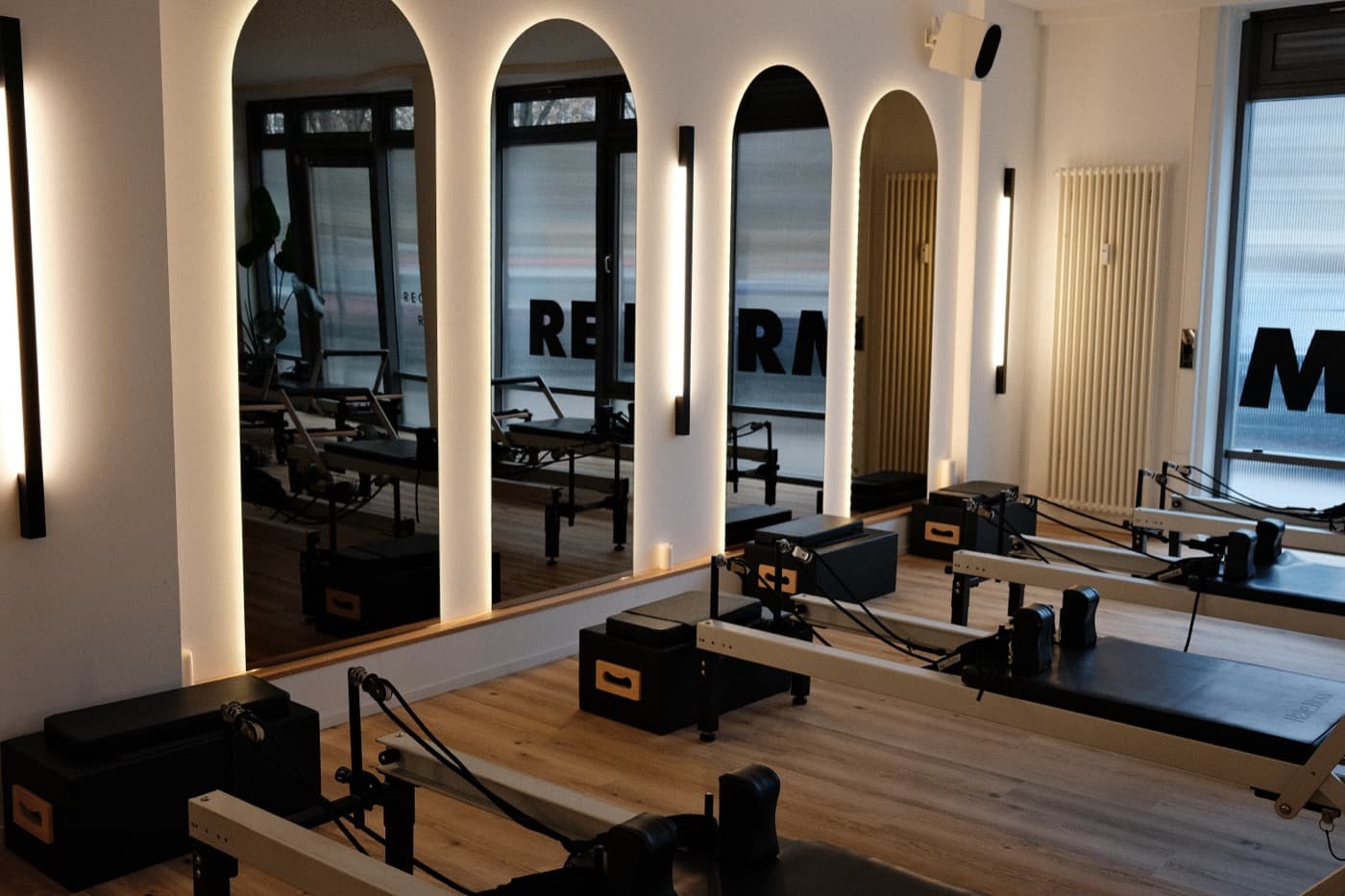
You stand at the Reformer, your group is waiting, and you know: this class is well prepared. Not because you spent hours researching — but because you have a system. A clear structure that works, whether you have 45, 60, or 75 minutes available.
That is exactly what this article is about. No theoretical concept, but a concrete guide: how to plan a Reformer group class so that it makes pedagogical sense, fits the time, and truly moves your participants forward.
Why Structure Matters More Than Exercise Selection
Many instructors spend most of their preparation time searching for new exercises. The understandable feeling: the class should stay varied, nothing should repeat. But the structure of the class is more decisive than the individual exercises within it.
A well-structured class with familiar exercises works better than an unstructured class with spectacular movements. Your participants feel the difference — even if they cannot name it.
"A class without structure is like a recipe without an order. The ingredients may be right — but the result is left to chance."
The Four Phases of a Reformer Group Class
Every Reformer class, regardless of length, follows four phases. These phases are not arbitrary — they correspond to the physiological logic of the body and the pedagogical logic of learning.
Phase 1: Arrival and Preparation
The first minutes at the Reformer belong to orientation. Your participants arrive from daily life — they need time to get into the body before you challenge it.
What belongs in this phase:
- Breath work lying or seated — activating body awareness
- Gentle spine articulation (pelvic curl, shoulder bridge preparation)
- Conscious setup of footbar position and spring configuration
Time frame: 8–12 minutes for a 60-min class, 5–8 minutes for a 45-min class.
Phase 2: Warm-up and Mobilization
Now you bring movement into the system. The spine is articulated, the hip flexors and shoulder region are mobilized. This phase not only prepares for the main work — it gives you as the instructor valuable information about the state of your group today. For a proven four-phase build, see the guide to Reformer Pilates warm-up exercises; for the whole picture, the guide to teaching reformer Pilates.
Typical exercises for this phase:
- Footwork series (parallel, V-position, heels) — 1–2 springs
- Hundreds preparation or light abdominal work
- Arm circles or overhead in supine
Time frame: 10–15 minutes. This phase is the most common shortcut trap: if you keep it too brief, it comes back to haunt you in the main work.
Phase 3: Main Work with Class Theme
This is where the real work happens. Choose a clear class theme — for example hip opening, rotational stability, or shoulder integration — and build your exercises so they progressively deepen this theme. If picking one is the part that stalls you, start from these 25 reformer class themes.
The class theme gives you as the instructor orientation and your participants coherence. They sense that the class has an inner logic — and this builds trust in you and the process.
Key principles for the main work:
- Progression within the theme: Begin with familiar patterns, increase complexity step by step
- Plan spring changes deliberately: Note them in your class plan — spontaneous spring changes cost time and interrupt the flow
- Space for one key exercise: Every class should have one exercise to which you give special attention — with detailed cueing and time for corrections
Time frame: 20–30 minutes, depending on total duration.
Phase 4: Cool-down and Integration
This phase is most commonly shortened — a mistake. The cool-down is not an optional bonus, but a pedagogically necessary conclusion. The body needs time to integrate what it has learned.
What belongs in this phase:
- Stretching of the muscle groups worked during the class
- Relaxation work at the Reformer (e.g., mermaid, spine stretch)
- A final moment of body awareness — comparing beginning and end
Time frame: 8–12 minutes. Shorter than this feels rushed and leaves your participants with an incomplete feeling.
Time Planning for Different Class Formats
Here is a concrete breakdown for the three most common formats:
45-Minute Class
- Arrival: 5 min.
- Warm-up: 8 min.
- Main work: 22 min.
- Cool-down: 8 min. (do not shorten)
60-Minute Class
- Arrival: 8 min.
- Warm-up: 12 min.
- Main work: 28 min.
- Cool-down: 10 min.
75-Minute Class
- Arrival: 10 min.
- Warm-up: 15 min.
- Main work: 35 min.
- Cool-down: 12 min.
These breakdowns are reference values, not laws. But they help you develop an internal timing — the feel for the rhythm of a class that distinguishes experienced instructors.
Exercise Selection: How to Make Good Decisions
How many exercises fit into a class? The rule of thumb: fewer than you think. A 60-minute class can realistically cover 10–14 different exercises — including variations and sides. Those who plan 20 exercises rush through the class and create no depth.
To see that in a finished plan: the Beginner Flow — Ball & Box runs 50 minutes across twelve exercises, with the spring setting and the reps written next to each one. The Intermediate Flow — Ring & Ball does the same for a more experienced group.
Three questions that should guide your exercise selection:
- Does this exercise serve the class theme? If not, cut it or move it to another class.
- Do I have a regression and progression prepared? Essential, especially in mixed-level groups.
- Do I know the most common error in this exercise — and my cue to address it? This is the preparation that actually helps in class.
The Most Common Planning Mistake
You now know how to structure a class. But the most common mistake lies not in the structure — it lies in the time spent on planning itself.
Those who plan a new class from scratch every week lose valuable hours that would be better spent on teaching. Professional instructors use systems: templates, concepts, plans that serve as a base and are individually adapted.
That is the idea behind Pilates Plans. A complete Reformer class concept that brings the pedagogical structure, notes the spring configurations and suggests progressions. You adapt it to your group — but the foundation is already there.
Ready to spend less time planning?
Pilates Plans gives you ready-made reformer class plans — one full plan free, more individually or as a bundle.
→ Get the free plan
Frequently Asked Questions
How long should each phase of a reformer class be?
In a 60-minute class: 8 to 12 minutes for arrival, 10 to 15 for warm-up and mobilisation, the bulk for the main work, and a real cool-down at the end. In a 45-minute class the arrival shrinks to 5 to 8 minutes. The phases stay the same — only the proportions move.
Is structure or exercise selection more important?
Structure. A well-structured class with familiar exercises works better than an unstructured class with spectacular movements. Your participants feel that difference even when they cannot name it — which is why hunting for new exercises is usually the wrong place to spend your preparation time.
Does every reformer class need a theme?
It needs one if you want the class to hold together. A clear theme — hip opening, rotational stability, shoulder integration — gives you orientation while planning and gives your group coherence while moving. Without it you have a sequence of exercises rather than a class.
How do I adapt the same plan to 45, 60 and 75 minutes?
Do not cut a phase, compress it. The four phases run in every format; what changes is how much room each one gets. The warm-up is the usual casualty, and shortening it too far is exactly what comes back to haunt you in the main work.