If there is one concept that unites all Pilates exercises, it is the interplay of spinal mobility and spinal stability. Those who truly understand this concept teach differently — more precisely, more deeply, more effectively.
Mobility ≠ Instability
A common misconception: more mobility is automatically good. But a hypermobile segment without stabilization is just as problematic as a stiff one. Pilates addresses both — and teaches the body to switch situationally between mobility and stability.
The Three Functions of the Spine
- Enable movement: Flexion, extension, lateral flexion, rotation
- Transfer load: From the trunk to the extremities and back
- Protective function: Spinal cord and nerve roots
Pilates training addresses all three — when you plan it consciously.
Segmental Control: The Heart of It
Segmental control means that individual spinal segments can be moved and stabilized independently of each other. Spinal articulation in all its variations — from pelvic curl to rolling back — trains exactly this.
"It is not the total movement that counts, but the quality of each individual segment."
Proximal Stability for Distal Mobility
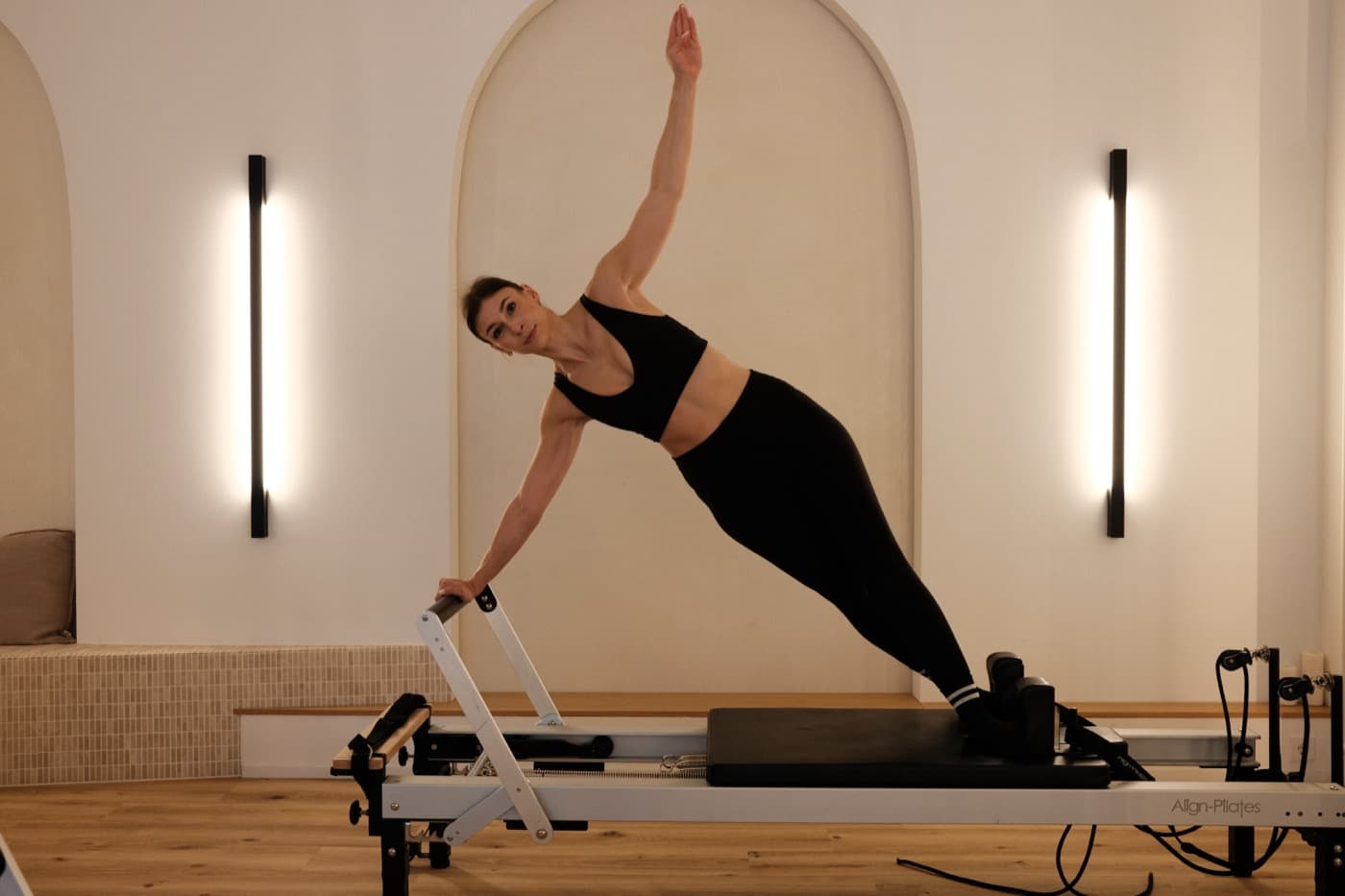
Another core principle: for extremities to move freely, a stable trunk is needed as a base. This apparent contradiction — stability enables mobility — is the heart of the Pilates system.
In practice, this means: before you do intense leg work in supine, ensure the pelvis is stable. Before you incorporate arm circles in standing, check thoracic control.
How to Integrate This Concept Into Your Class Planning
- Begin every class with spinal mobilization — articulated, conscious, without speed
- Then establish stabilization patterns — neutral spine, central activation
- Only then: extremity work on a stable trunk
- Integration at the end: fluid movements that connect both
This sequencing principle is built into every Pilates Plans class plan. You do not have to reinvent the concept each time — but you should know it, in order to apply it consciously and explain it to your participants.
Why This Changes Your Classes
When you work with this concept, your cueing changes. You no longer speak of "draw your belly in," but of "lower back in contact with the mat" or "let the sternum become heavy while the lumbar stays free." This precision works — on the bodies and minds of your participants.
Frequently Asked Questions
Is more spinal mobility always better?
No. A hypermobile segment without stabilisation is just as problematic as a stiff one. Pilates trains both and teaches the body to switch between mobility and stability depending on the situation.
What is segmental control?
The ability to move and stabilise individual spinal segments independently of each other. Spinal articulation in all its variations — from pelvic curl to rolling back — trains exactly that. What counts is not the total movement but the quality of each segment.
What does proximal stability for distal mobility mean?
That extremities need a stable trunk as a base in order to move freely. In practice: secure a stable pelvis before intense supine leg work, and check thoracic control before standing arm circles.
In what order should mobility and stability appear in a class?
Start with articulated spinal mobilisation, without speed. Then establish stabilisation patterns — neutral spine, central activation. Only then extremity work on a stable trunk, and finish with fluid movements that connect both.