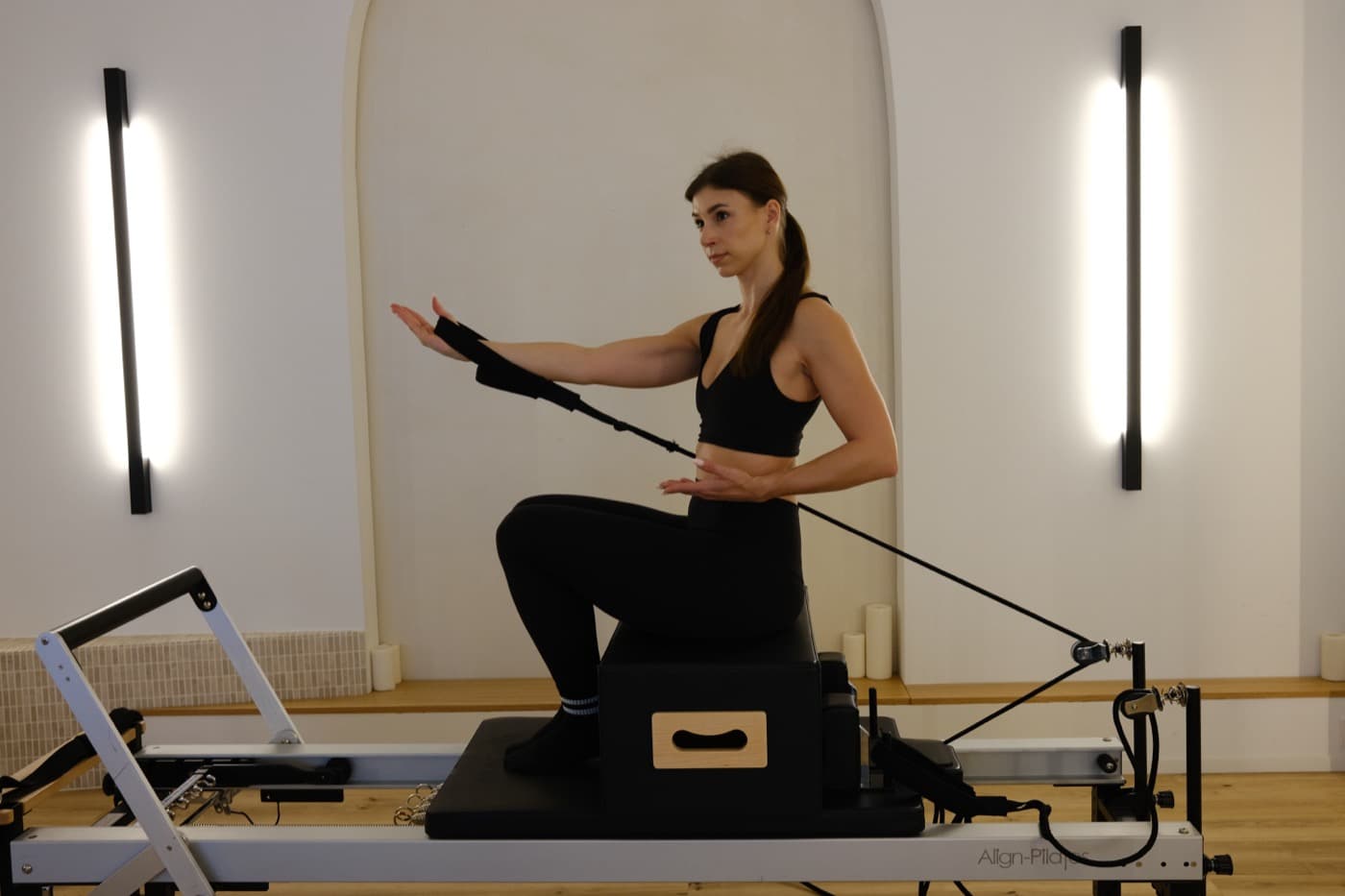
Cueing is both art and science. The best instructors know: a single image can do more than five anatomical explanations. But poor cueing can prevent movement rather than enable it — sometimes without you even noticing.
Mistake 1: Too Much at Once
"Draw your belly in, keep your shoulders down, lengthen the leg, exhale and rotate your gaze upward." Nobody can process five instructions simultaneously. Choose one focus per exercise — and stick to it.
Mistake 2: Anatomical Language Instead of Experiential Language
"Activate the M. transversus abdominis" does nothing for most groups. "Imagine zipping up from your hip to your ribs" creates an inner movement — even without anatomy training.
"Cueing is communication, not a lecture."
The Solution: Experience-Based Images
Ask yourself: what should the person feel? Build your cue around that sensation. Tactile, spatial, and metaphorical cues reach where verbal instruction fails.
Mistake 3: Always the Same Phrasing
"Draw your belly in" is the most used Pilates cue — and the most misunderstood. When you always use the same words, your participants eventually stop listening. Vary. Surprise. Keep attention alive.
- Instead of "belly in": "Create space between your ribs and hips"
- Instead of "shoulders down": "Let your shoulder blades melt into your back"
- Instead of "exhale": "Send the breath out through your back"
Mistake 4: Cues Without Timing
The best cue at the wrong moment does not work. Give your cue at the right point in the movement — ideally just before the action happens, not in the middle of it. Your brain needs time to translate language into movement.
Mistake 5: No Feedback After the Cue
You give a cue — and then you are already looking at the next person. Instead, observe whether your cue works. Did something change? If not, it needs a different approach — not the same cue louder.
Good cueing is a craft that is never fully learned. With every cue you learn something about your group — and about yourself as an instructor.
Frequently Asked Questions
How many cues should I give per exercise?
One focus, and stick to it. Nobody can process five instructions at once — draw the belly in, shoulders down, lengthen the leg, exhale, rotate the gaze all land as noise. Cueing is communication, not a lecture.
Why do anatomical cues not work?
Because most groups have no anatomy training. Activate the transversus abdominis does nothing; imagine zipping up from your hip to your ribs creates an inner movement. Ask what the person should feel, then build the cue around that sensation.
When in the movement should I give a cue?
Just before the action happens, not in the middle of it. The brain needs time to translate language into movement, so the best cue at the wrong moment simply does not work.
What do I do when a cue does not land?
Change the approach, not the volume. Repeating the same cue louder rarely helps. Watch first whether anything changed at all — giving a cue and immediately looking at the next person means you never find out.