You have probably heard the rule: external cues good, internal cues bad. Stop saying "squeeze your glutes", start saying "press the floor away".
The rule is mostly right. It is also more interesting than that, and the part that gets left out is the part that matters most when you are teaching beginners.
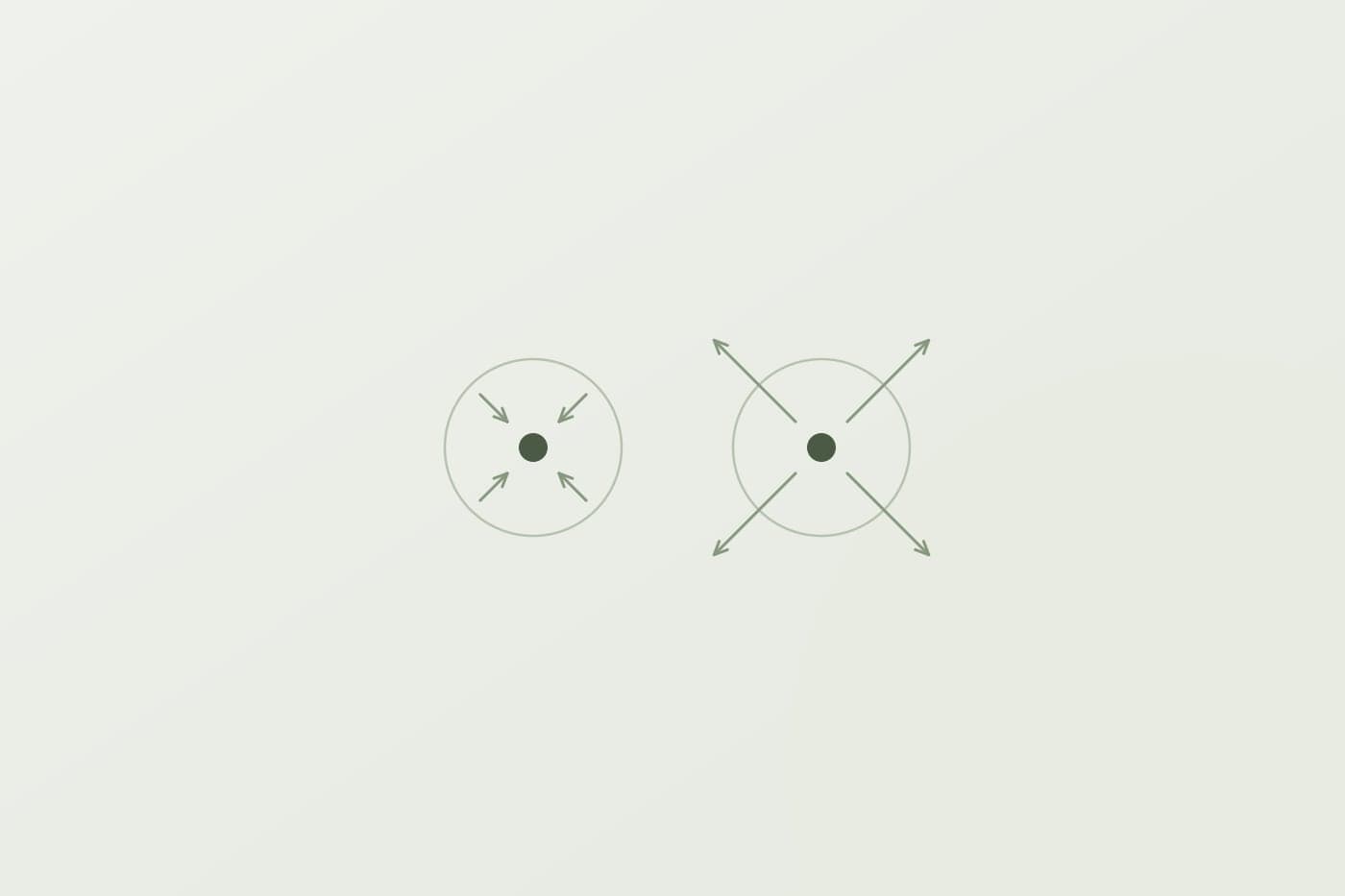
Short version: An internal cue points attention at the body. An external cue points at what the body does to something else. Across 143 studies, external focus wins for performance and for retention. But the advantage is strongest in experienced movers — and close to negligible in complete beginners.
The distinction, plainly
Both cue types can describe the same movement. The difference is where you send your client's attention.
| Movement | Internal cue | External cue |
|---|---|---|
| Footwork | "Extend your knees" | "Push the carriage to the end of the track" |
| Arms in straps | "Pull your shoulder blades down" | "Keep the straps quiet" |
| Bridging | "Squeeze your glutes" | "Push the floor away from you" |
| Long stretch | "Engage your abdominals" | "Stop the carriage from moving" |
| Standing lunge | "Tighten your standing leg" | "Grow taller through the crown of your head" |
Notice that the external versions are not vaguer. They are more specific — they just measure success by something the client can see or feel outside their own body.
What the research actually found
This is one of the better-studied questions in motor learning, and the headline is consistent.
The largest synthesis to date, published in Psychological Bulletin in 2021 by Chua, Jiménez-Díaz, Lewthwaite, Kim and Wulf, pooled 143 studies. External focus came out ahead on both measures: a small advantage for immediate performance and a medium advantage for learning and retention — meaning the difference showed up more strongly when people came back another day and tried again.
The usual explanation is the constrained-action hypothesis: when you tell someone to think about their own body, they start consciously steering a movement their nervous system could otherwise run automatically. Conscious steering is slower and clumsier. Point their attention outward and the automatic system gets on with it.
"An internal cue asks the body to be supervised. An external cue lets it get on with the job."
A 2025 review of 20 controlled trials added a detail worth knowing: distance matters. Focusing on something further away from the body beat focusing on something close to it. "Press the carriage to the end of the track" outperformed "press through your foot".
The nuance most summaries skip
Here is the part that changes how you should teach.
That same 2025 review broke its results down by experience level. Among experienced movers, the far-external focus advantage was clear. Among novices, it very nearly vanished — the difference was small enough that it could not be distinguished from chance.
That makes intuitive sense once you say it out loud. An external cue works by handing control to a movement pattern that already exists. If your client has never done the movement before, there is no pattern to hand it to yet.
It is also worth knowing that the field is not entirely settled. A recent Bayesian re-analysis argued that part of the external-focus effect in the published literature reflects reporting bias rather than a true effect. That does not overturn the practical advice — external cues are still the better default — but it is a reason to treat "external always wins" as a rule of thumb rather than a law.
How to use this in a reformer class
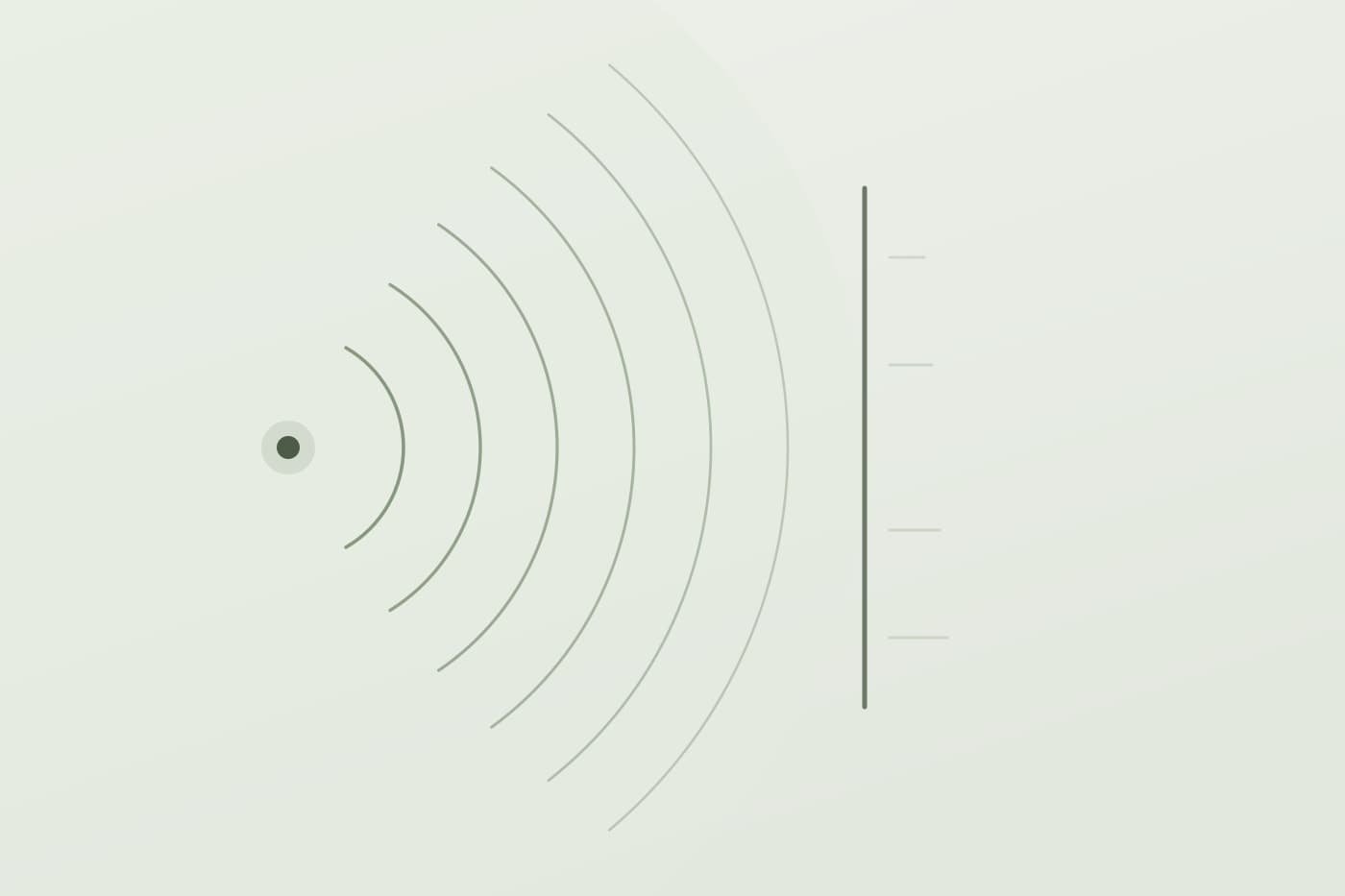
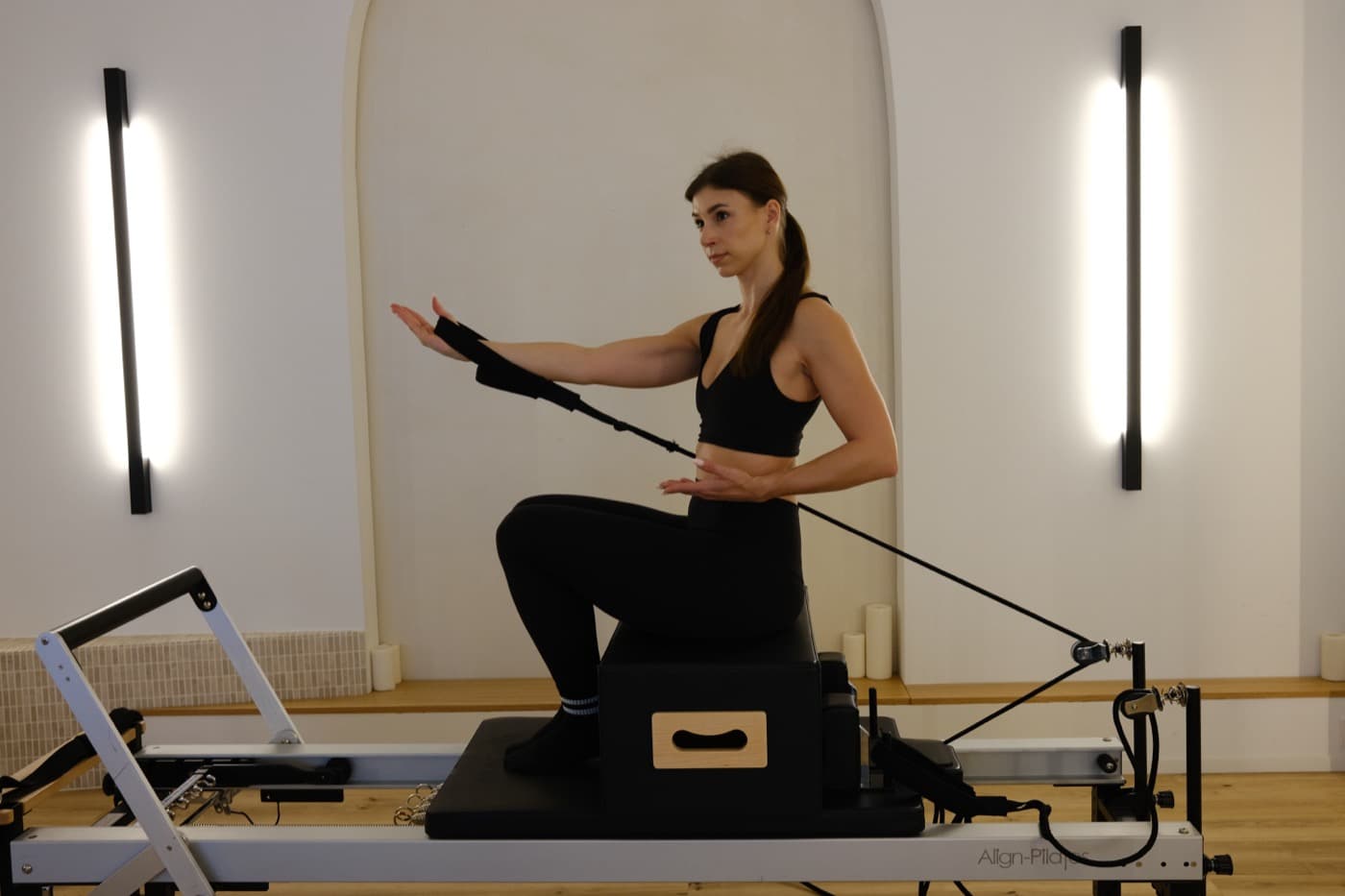
Default to external. For most of your cues, most of the time, aim attention at the equipment. The reformer is a gift here — you have a carriage, springs, straps, a footbar and a headrest, all of which give your client something outside their body to move, quiet, or hold still.
Use internal cues to build, not to run. When someone genuinely cannot find a muscle or does not know what a body part is doing, an internal cue is the right tool. "Feel your ribs on the mat" is useful when there is no other way to convey it. Then switch — once the movement exists, keep pointing outward so it can become automatic.
Go further away when you can. If you have a choice between the foot and the far end of the carriage, choose the far end. Distance appears to help.
Do not translate every single cue. A class of entirely equipment-focused language starts to sound like machine instructions. Your job is not to eliminate internal cues; it is to stop them being the default. Mixing is fine — leading with internal is what costs you.
If your cues are landing badly for reasons other than this, the five most common causes are in why your cues don't land.
A quick rewriting exercise
Take your five most-used cues. Write them down honestly — the ones that actually come out of your mouth, not the ones you would like to use.
For each one, ask: what does the body do to something outside it when this is done correctly? That answer is usually your external version.
"Engage your core" becomes "keep the carriage still". "Don't let your hips drop" becomes "keep the strap at the same height". "Squeeze your inner thighs" becomes "hold the ball still".
Five cues is enough. Rewrite those, use them for a fortnight, and the pattern starts generating itself. That is the same approach behind building your own teaching language.
What to expect
Do not expect a transformed class overnight. The effect in the research is real but moderate, and it shows up most clearly in retention — how well the movement holds up next week, not how it looks in the next thirty seconds.
What you will notice sooner is your own teaching. External cues are harder to write and shorter to say. They force you to know exactly what you want to happen, which is the actual skill hiding underneath all of this.
Spend less time planning, more time teaching.
Pilates Plans gives you ready-made reformer class plans — one full plan free, more individually or as a bundle.
→ Get the free plan
Frequently Asked Questions
What is the difference between an internal and an external cue?
An internal cue points attention at the body itself — "squeeze your glutes", "engage your abdominals". An external cue points at the effect the body has on something outside it — "press the carriage away", "make the strap go quiet". Same movement, different place to put your attention.
Are external cues better than internal cues?
On average, yes. The largest review to date pooled 143 studies and found external focus produced better performance and better retention, with a medium effect on learning. But "on average" hides a lot: the advantage is clearest in experienced movers and much smaller in beginners.
When should I still use an internal cue?
When the client genuinely does not know where a body part is or what it should do — early rehab, isolating a muscle they cannot find, or teaching breath mechanics. Use it to build awareness, then switch to an external cue once the movement exists, so it can become automatic.
What is a good external cue example on the reformer?
Instead of "extend your knees" during footwork, say "push the carriage all the way to the end of the track". Instead of "keep your shoulders down" in straps, say "keep the straps quiet". The target is what the body does to the equipment, not what the muscle does.