You know the exercises. You can see exactly what's off. But the sentence that would fix it doesn't come out — or it comes out wrapped in four clauses, and afterward your group looks at you like you just taught in Latin.
That's not a talent problem. Cueing is a craft, and crafts can be learned.
Short version: learning to cue well isn't about knowing more sentences — it's about knowing fewer, better ones. There are three channels (verbal, visual, tactile), and the most effective verbal cues point attention outward instead of at individual muscles. The way there is collecting, rephrasing and testing — not memorizing.
What Three Channels Are You Cueing Through?
Before you polish individual sentences, it helps to see the whole picture. You have three channels available, and most of us only really use one of them.
Verbal. What you say. It's the channel that gets the most airtime in teacher training — and the one that gets overloaded fastest in the real room.
Visual. What you show. Half a demonstration is often faster than three sentences, especially for anything spatial: positions, grips, direction of travel. The catch: show it, then step back and watch. Nobody corrects a class they're doing themselves.
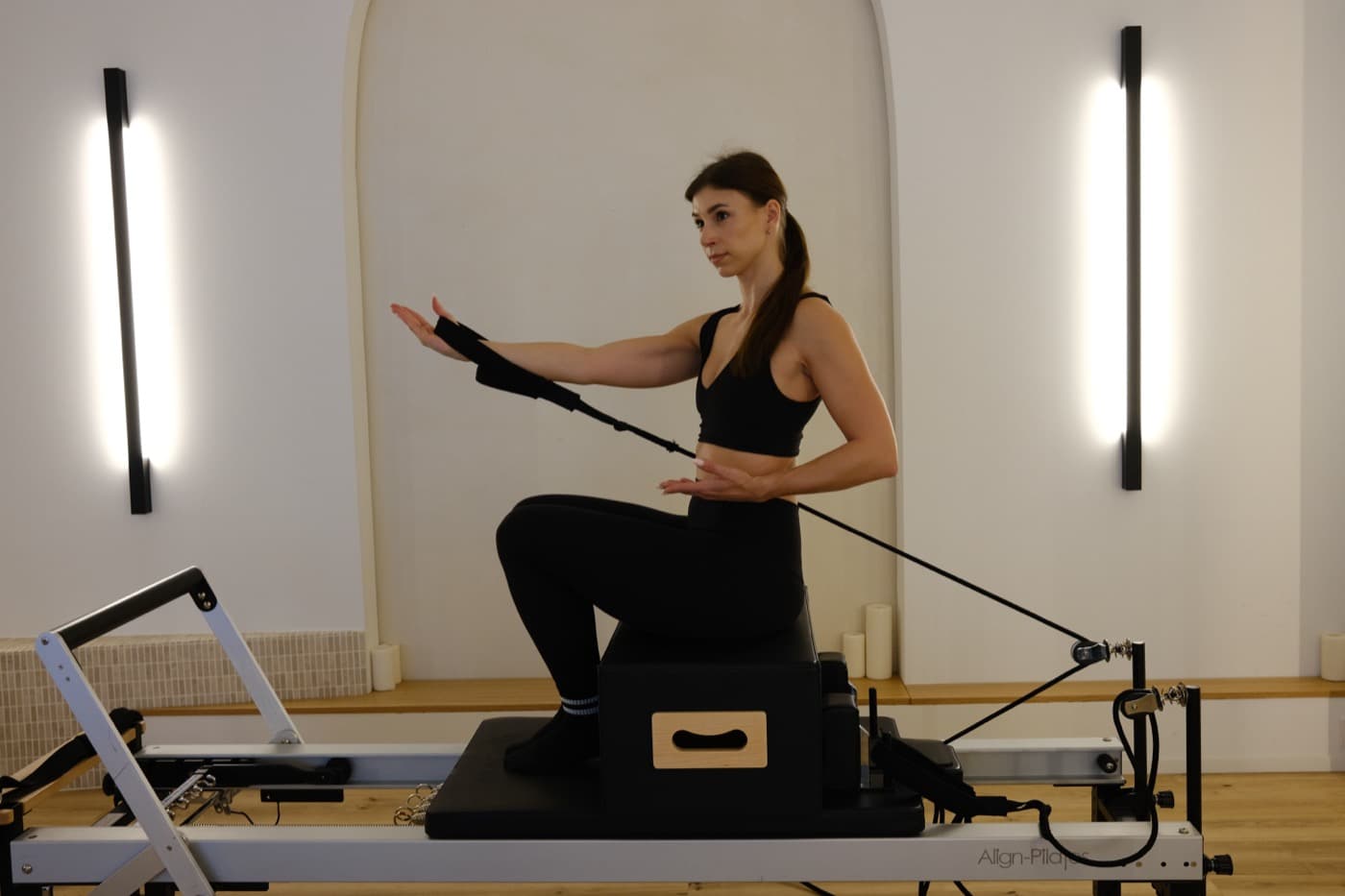
Tactile. What you touch. The fastest channel there is — a hand on a shoulder blade explains in a second what would take ten seconds verbally. It's also the channel with the most rules: only with consent obtained in advance, always announced, always brief.
Good instructors move between all three. If a cue isn't landing the second time, the problem usually isn't the sentence — it's the channel.
Internal vs. External Focus — the One Distinction Worth Getting Right
If you take one thing from this article, make it this one.
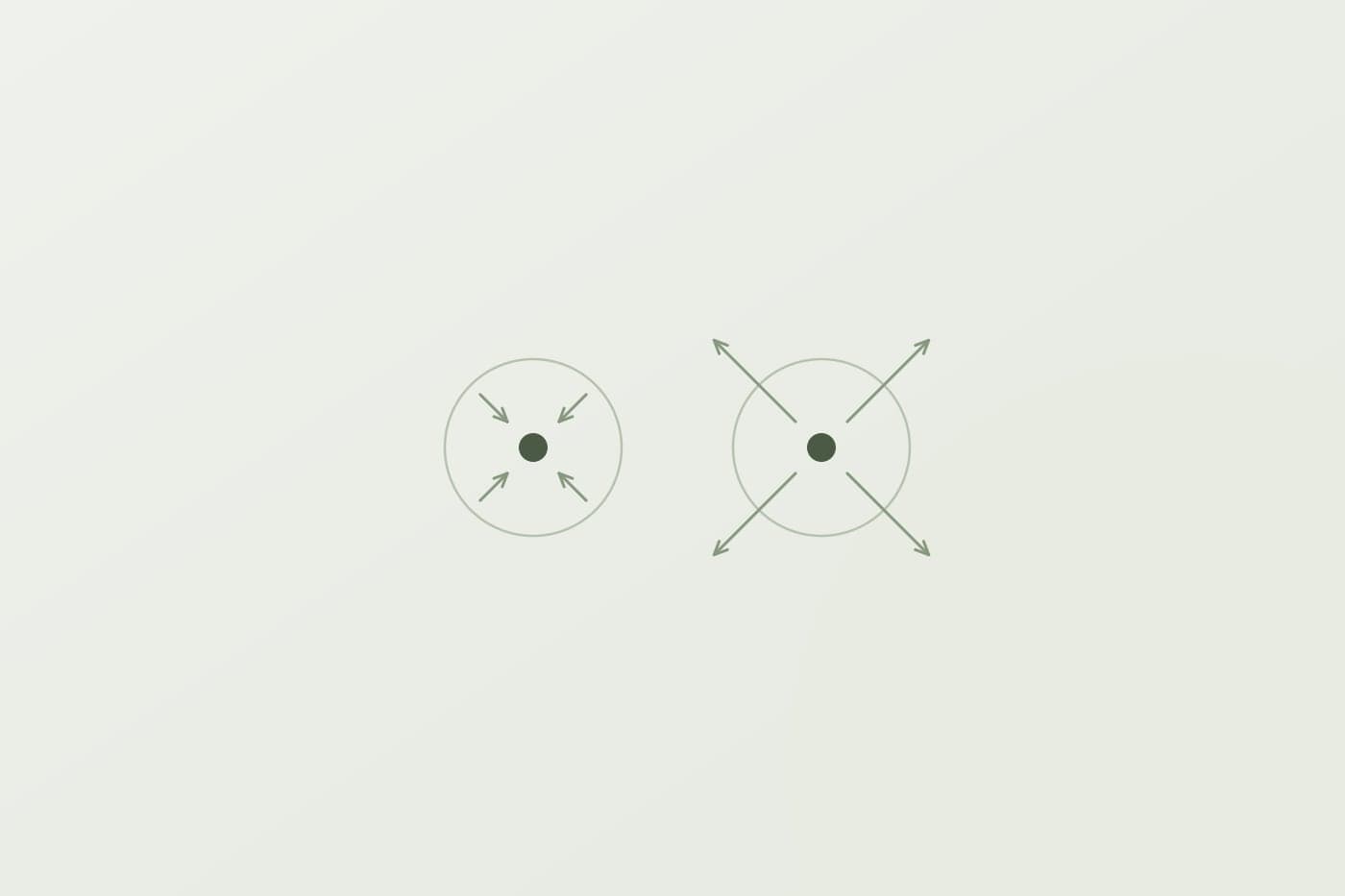
Internal cues point attention into the body: "engage your abs," "activate your pelvic floor," "squeeze your shoulder blades together."
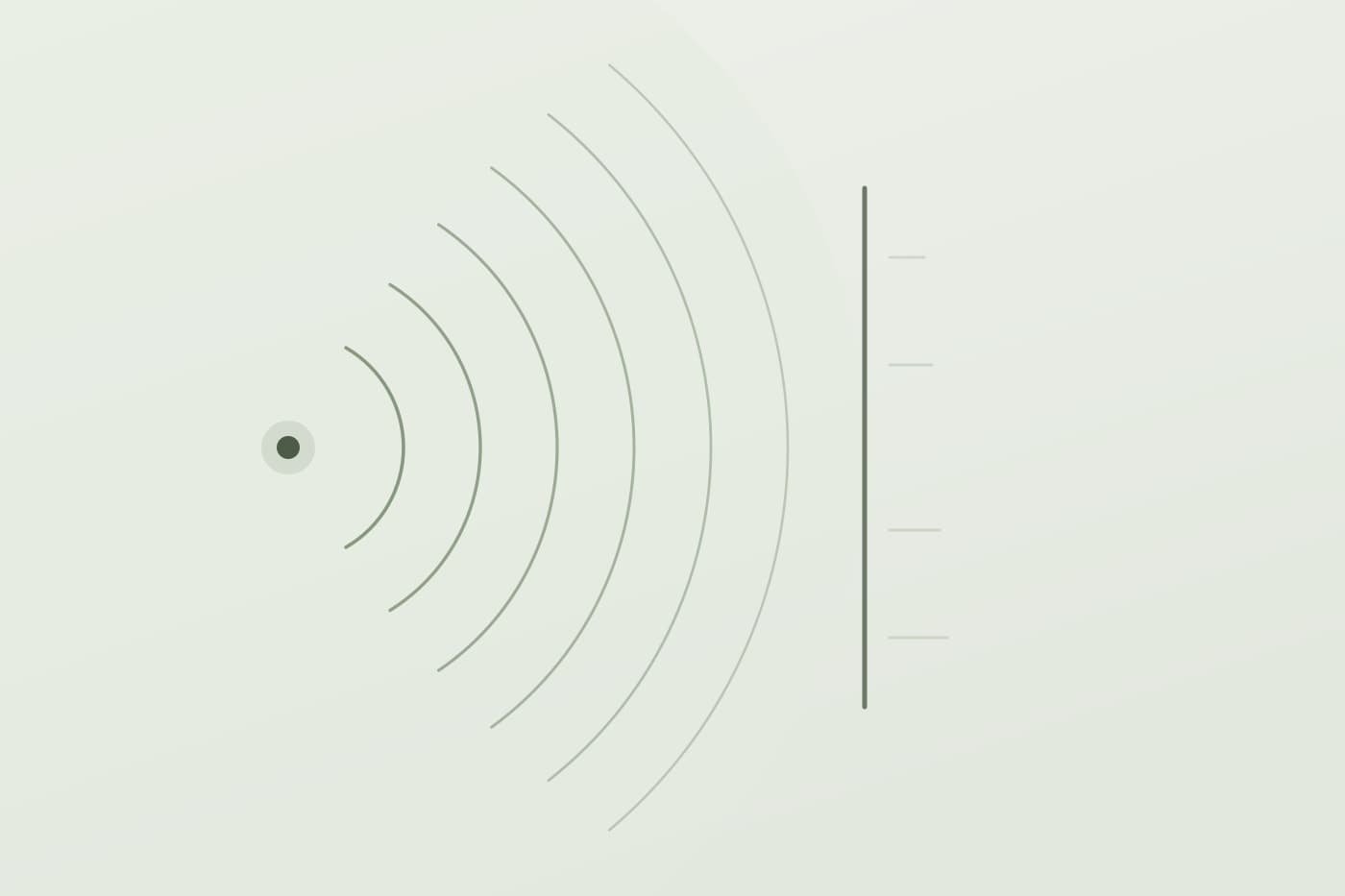
External cues point at a target outside it: "push the carriage away without a sound," "grow so tall your head touches the wall," "let the springs come back quietly."
This isn't a new debate — motor-learning research has been circling it since the 1990s, and the pattern holds up well: pointing attention outward tends to produce smoother, more efficient, more automatic movement, because consciously steering individual muscles interrupts processes the nervous system already runs better on its own. We've covered the actual research, the effect sizes and the important beginner caveat in a separate deep dive — internal vs external cues: what actually changes movement. This article picks up from there: not why external focus works, but how you turn that into language that's actually yours.
"Don't say which muscle should work. Say what should happen — the body finds its own way there."
Does that mean internal cues are wrong? No. For body-awareness work, for breathing, for clients recovering from injury who need to reconnect with a region before anything else, they're exactly right. But they should be the exception, not the default.
A quick translation drill for everyday use:
- Instead of "pull your stomach in" → "shorten the distance between your ribs and your hips."
- Instead of "shoulders down" → "make your neck long, like it's too tight for you."
- Instead of "engage your core" → "keep the carriage so quiet nobody can hear it."
- Instead of "lift your pelvic floor" → "let your pelvic floor rise with your exhale."
What Makes a Cue Usable?
Four traits you can check every sentence against:
- One instruction. Not two. "Push away, and exhale, and keep your pelvis still" isn't a cue — it's a to-do list.
- Verb first. "Push," "let," "make," "pull." Avoid sentences that open with "try to maybe see if" — by the time the verb arrives, the rep is over.
- Short enough for one exhale. If you can't say the cue in a single breath, it's too long.
- Checkable. You should be able to see whether it landed. "Be present in your body" isn't checkable. "Let your heels get heavy" is.
And then the part no teacher-training manual mentions: after the cue comes silence. Five seconds where nobody talks and everyone gets to actually apply the instruction. Jump in immediately and you cancel out the exact change you just triggered. If your cues tend to land flat for other reasons, we've broken those down in why your cues don't land.
When Do You Cue: Before, During, or After?
The same sentence lands completely differently depending on when it arrives.
Before the exercise is where all the logistics go: position, grip, springs, direction. You can afford two sentences here, because nobody's moving yet.
During the exercise gets exactly one quality cue. The single point that matters most today. Everything else gets dropped, even if you can see three other things.
After the exercise is where feedback belongs: what changed, what to add next round. It's also the moment people actually listen, because they're not working at the same time.
Touch Cues: Short, Announced, Optional
Touch is the most direct channel — and the one with the most that can go wrong. Three fixed rules:
- Get consent in advance, not mid-movement. Best done once at the start of class, for everyone: "I sometimes correct with my hands. If that's not for you, just let me know — that's completely fine."
- Announce and name it: "I'm going to place a hand on your lower back for a second." Nobody likes a surprise touch.
- Brief and active: the hand gives a reference point to work against — it doesn't push anyone into position. Then it comes off again.
How Do You Build a Cue Journal in 4 Weeks?
You don't learn cueing from a list. You learn it by building your own collection. Here's the concrete process.
Week 1 — collect. Write down two cues a day that cross your path: from your own classes, from workshops, from classes you take yourself. Raw, unedited, straight into your phone.
Week 2 — translate. Take your collection and rewrite every cue in your own words. You don't want to recite borrowed sentences — you want to say them the way you actually talk. While you're at it, try converting every internal cue into an external one.
Week 3 — test. Pick exactly three cues from your list per class and use only those. Fewer, but deliberate. After class, mark each one: worked, didn't work, too long.
Week 4 — listen. Record one of your classes on your phone and listen back. It's uncomfortable, and it's the single most effective exercise there is. Listen for three things: how often do you say filler words? How long are your sentences, really? And how much silence do you actually leave?
Then you start again at week 1. After three rounds, you no longer have a cue list — you have a teaching voice.
What Can You Safely Drop?
Cueing doesn't improve by saying more. Four habits you can cut without losing anything:
- Constant praise. "Great, nice, perfect, awesome" on a loop loses all meaning. Praise tied to something specific hits ten times harder.
- Counting every rep out loud. Counting fills silence but says nothing. Use that airtime for a quality cue instead.
- Anatomy lectures. Naming the muscle doesn't help anyone move it. At best it's impressive — and rarely to the people who need the cue.
- Apologizing. "Sorry, this one's kind of hard" strips the exercise of its clarity before it's even started.
For more of the usual traps — and how to get rid of them — see the most common cueing mistakes and pilates cueing techniques: why your voice changes movement quality.
Cues That Already Come With the Class
Every one of our reformer class plans has the matching cues written right into each exercise — phrased with external focus, short enough for one exhale, with variations for mixed levels. Use them exactly as written, or as a template for building your own collection.
One full class plan is free.
Frequently Asked Questions
What is cueing in Pilates?
Cueing is everything you use to guide a movement: words, images, demonstration and touch. A cue isn't a comment on the exercise — it's a single, clear instruction your client can act on immediately. Good cueing replaces explanation with direction.
What's the difference between internal and external cueing?
Internal cues point attention at the body itself ("engage your abs"). External cues point at a target outside the body ("push the carriage away without a sound"). Motor-learning research has shown for years that external focus tends to produce smoother, more efficient movement. Internal cues still earn their place for body-awareness work and breathing.
How do I actually learn good cueing as a new instructor?
Not by memorizing lists — by collecting and testing. Write down five cues a week that you hear somewhere, rephrase them in your own words, try them in real classes, and keep only the ones that visibly changed something. After about three months you'll have a collection that's genuinely yours.
How many cues should I give per exercise?
One to start, two at most while it's happening. Nobody can act on more than that — stack three instructions in a row and your group stops listening and just keeps moving. One cue, then five seconds of silence for people to actually apply it, beats a running commentary every time.